Epd сертификат что такое
Экологическая и Климатическая декларации
Экологическая и Климатическая декларации
Экологические декларации могут быть разработаны любой организацией Для любой продукции или услуги. Более подробно тут: http://epdrussia.org/.
Цель оформления декларации: предотвращение ущерба окружающей среде через предупреждение рискованных действий по отношению к ней.
Организации имеющие активную или пассивную систему управления окружающей средой могут достичь стратегических и конкурентоспособных преимуществ.
Кроме того, Экологические декларации могут иметь значение при организации:
Экологическая декларация демонстрирует стремление компаний к улучшению и оптимизации процессов производства с точки зрения ресурсоэффективности и влияния на окружающую среду.
Услуги направления
Регистрация экологической декларации
Экологическая декларация регистрируется в Международной системе The International EPD System, существующей более 20 лет и признаваемой на рынках более чем 40 стран мира.
Стандартный срок оказания услуги: 30 календарных дней. Более сжатые сроки разработки уточняются в каждом отдельном случае.
Услугу по разработке Паспорта безопасности РФ предоставляет ООО «Интер-Эксперт» (interexpert.info, +7-495-542-22-14).
Стоимость услуги: по счету. Оплата производится только по безналичному расчету.
Разработка экологической декларации
Производится оценка текущего состояния деятельности и эффективности организации, осуществляющей (или стремящейся к осуществлению) различные природоохранные меры при производстве продукции или реализации услуг, составляется отчет об оценке жизненного цикла продукта, на основании чего производится формирование макета декларации, подлежащего процессу верификации независимыми экспертами, после чего происходит регистрация декларации в Международной системе The International EPD System, существующей более 20 лет и признаваемой на рынках более чем 40 стран мира.
Разработка и регистрация климатической декларации
Разрабатывается на основе Экологической декларации и отражает выбросы парниковых газов продукта с точки зрения жизненного цикла.
Получить услугу можно только после разработки Экологической декларации. Документ является обязательным при экспорте продукции в страны Северной Европы (охват законодательства будет расширяться).
По составлению паспорта безопасности химической продукции, подготовке к вступлению в силу ТР ЕАЭС 041/2017 и наилучшим практикам регулирования.
Environmental Product Declaration (EPD) – Экологическая декларация продукта для итальянских керамических поверхностей | Walter Sancassiani


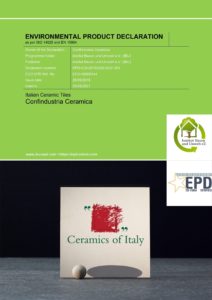
Конфедерация керамических производителей предложила ввести Экологическую декларацию продукта (EPD — Environmental Product Declaration) для входящих в нее предприятий с целью информирования об экологических характеристиках керамических поверхностей, что необходимо для получения премиальных баллов посредством рейтинговых схем в области строительства.
EPD – это сертифицированное и проверенное независимыми экспертами сообщение, в котором понятным сравнительным образом представлены данные об экологических характеристиках продукта в течение всего цикла его эксплуатации в соответствии со стандартом ISO14025. В итоге, каждая декларация EPD содержит общую информацию о продукте и процессе его производства, анализ его эксплуатационных свойств и воздействия на различные аспекты и категории окружающей среды, полученный в результате исследования его жизненного цикла (LCA), а также сопутствующие дополнительные экологические данные.
Почему?
Индустриальная отрасль по производству итальянских керамических поверхностей в ответ на вызовы и возможности устойчивого развития добавляет себе еще один инструмент управления и информирования в качестве отличительного стратегического элемента для повышения конкурентоспособности отрасли на международном уровне.
В 2015 году Конфедерация керамической отрасли в сотрудничестве с Thinkstep предоставила входящим в нее компаниям исследование EPD на уровне отрасли. Среднеотраслевая декларация, полученная от ассоциации, позволяет всем предприятиям, производителям керамических поверхностей, осуществлять EPD отдельных продуктов, исходя из средних отраслевых данных, что экономит время и деньги.
Шаги по реализации Экологической декларации продукта однозначно определены в документе под названием “PCR” (Product Category Rules – Нормы категории продукта). Каждый PCR относится к одной товарной категории, что гарантирует одинаковые правила выполнения и сопоставимости результатов.
Важность EPD для проектировщиков—архитекторов
EPD – это эффективный технико-информационный инструмент, позволяющий профессионалам строительной отрасли приобретать продукцию с критериями экоустойчивости, которые обеспечивают архитектурному проектированию зданий соответствие правилам Умного и Зеленого строительства. EPD поддерживает и квалифицирует проектировочные решения исходя из надежных и точных критериев, основанных на процедуре строгого и проверенного расчета, выполненного сторонним субъектом. Кроме того, EPD отлично интегрируется с самыми последними схемами Рейтинга устойчивости для строительной отрасли, которые ориентированы на оценку аспектов экоустойчивости зданий на основе целого ряда количественных и качественных критериев.
Преимущества EPD для проектировщика
Потенциальные преимущества, которые EPD придает керамическим поверхностям в рамках проекта здания, зависят от различных составляющих и имеют разную валентность для каждой системы международного сертификационного рейтинга Green Building.
В стандарте LEED (Лидерство в Энергетическом и Экологическом дизайне) проект получает премиальные баллы, если выбор строительных материалов приходится на как минимум 20 продуктов от не менее чем 5 разных поставщиков, сертифицированных EPD. В этом случае присваивается 1 дополнительный балл.
Для достижения показателя 20 продуктов учитываются: ¼ продукции при наличии сертификата LCA, проверенного сторонним экспертом; ½ продукции при наличии среднеотраслевого EPD сертификата; 1 продукт со специфицированным EPD сертификатом.
В случае протокола BREEAM (Building Research Establishment Environmental Assessment Method) проекту присваивается 1 дополнительный премиальный балл, если хотя бы пять продуктов имеют сертификат EPD, в то время как 1 балл плюс определение «образцовый уровень» присваивается проекту, в котором использованы не менее десяти продуктов, сертифицированных EPD.
В немецкой системе DGNB (German Sustainable Building Council) данные EPD одного продукта облегчают расчет показателя LCA здания в целом, «удельный вес» которого в сертификации составляет 13,5% от общего количества баллов.
Во французском стандарте HQE (Haute Qualité Environnementale), EPD учитывается как в сфере жилых зданий, так и нежилых, и рассматривается как «необходимое вступительное требование» для уровней “Performing” и “High Performing”в плане эксплуатационных качеств.
Скачать здесь Экологическую декларацию продукта (EPD — Environmental Product Declaration).
Документ об информационной прозрачности
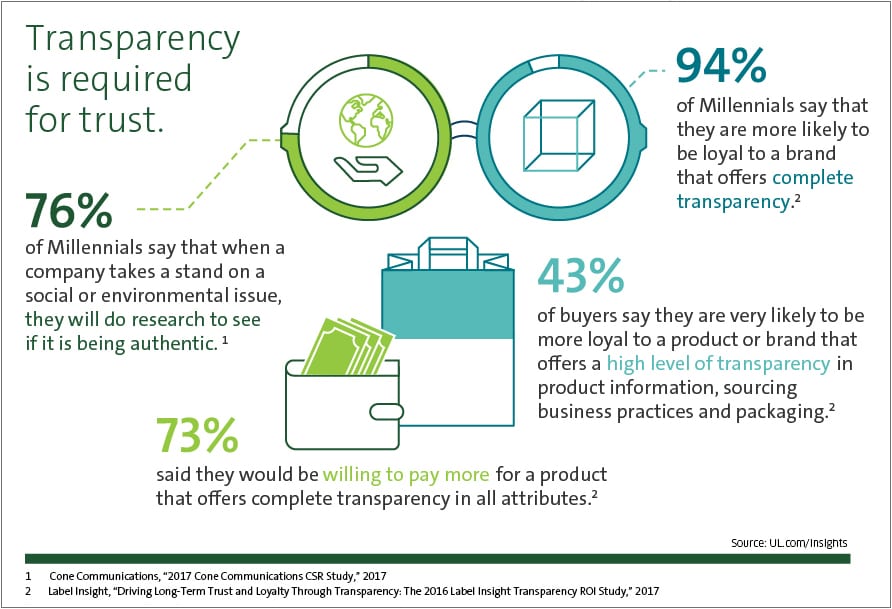 Transparency Summary – это сводный документ среднеотраслевой Экологической декларации продукта, который в понятной форме сообщает об экологическом воздействии итальянской керамической плитки на окружающую среду с учетом всего жизненного цикла: от колыбели до могилы. В нем подчеркнуты ее характеристики гигиеничности, безопасности для здоровья, отсутствие органических и летучих веществ, вредных для здоровья во внутренних помещениях, а также в нем указаны энергетические показатели, происхождение использованного сырья, повторное использование материалов и производственных отходов, а также возможность вторичной переработки продукта в конце жизненного цикла.
Скачать здесь документ об информационной прозрачности.
You are hyper-transparent, others do the rest
The overall goal of an EPD is to provide relevant and verified information to meet the various communication needs.
An important aspect of EPD is to provide the basis of a fair comparison of products and services by their environmental performance. EPDs can reflect the continuous environmental improvement of products and services over time and can communicate and add up relevant environmental information along a product’s supply chain.
EPDs are based on principles inherent in the ISO standard for Type III environmental declarations (ISO 14025) giving them a wide-spread international acceptance.
External and internal drivers
Market & Legal Regulation
Enable Building Level LCA
Green Building Schemes
Green Public Procurement
Marketing
Benchmarking
Ecodesign
Sustainable Supply Chain Mgt. (SSCM)
Market and legal regulations
To date, manufacturers are not obliged (mandatory by law) to provide EPDs. But, the market increasingly regulates the use of EPDs in various applications itself.
Upcoming regulations and directives for EU domestic and foreign organisations:
Market regulation (semi-mandatory/bonus-malus) in place as of today:
Building level LCA
Building level LCA’s are increasingly being be mandated (market regulation) when trying to address the topic of embodied carbon in buildings by public and private actors, esp. in the Nordics and Western-Europe.
EPDs provide the product-specific environmental performance data that can be used when conducting the whole building LCA.
Building Level LCA is closely linked with voluntary green building schemes, but there is no doubt that this method will increasingly be mandated by policy developers working on future directives and regulations.
Eg. in Sweden we see a national law coming in place that may require any building coming to market from 2022 to have a building level LCA. For additional information (in Swedish) on expected mandatory Building LCA requirements in Sweden, please click the following buttons.
Regeringen website
Boverket website
In addition, the European Commission’s Level(s) framework, which is a new European approach to assess and report on the sustainability performance of buildings, throughout the full life cycle of buildings will push for harmonization on EU level.
European Commission’s Level(s) framework for sustainable buildings
Using existing standards, the Level(s) framework with its indicators provides a common language for building sustainability, which can be used directly on building projects and portfolios, or as a basis for other initiatives, policies, schemes, and actions, to include life cycle thinking and circularity.
Level(s) website
Green building assessment schemes
The interest for environmental declarations in building rating systems and certification schemes has increased in the last few years, as they may demonstrate knowledge of the life cycle environmental impact of the ingoing construction materials.
In a recent study by OneClick LCA on embodied carbon, the authors conclude that «of the schemes directly addressing embodied carbon, 89% required use of EPDs.»
They also pointed out the different roles an EPD plays in the various building schemes:
Green Building Scheme examples:
LEED by the US Green Building Council (USGBC) is one of the building assessment schemes that have come the furthest in giving benefits for projects where EPDs are available to encourage the use of (buying low carbon) products with life-cycle information.
BREEAM has several national implementations where the requirements are somewhat different. Normally, only pre-approved national databases of LCA information are accepted. Currently, BREEAM has national schemes in the following countries: United Kingdom, USA, Netherlands, Norway, Spain, Sweden, Germany, Austria and Switzerland. Please contact your local BREEAM national scheme operator for more information about how EPDs for construction products may be used for documentation and buying low carbon products.
GreenStar, HQE, Miljöbyggnad, DGNB International, Zero Carbon Certification, Home Quality Mark and Green Building Index are all other building assessment schemes where Environmental Product Declarations can be used to obtain several credits in order to reach higher levels. By either documenting a/o using EPDs for LCA and product comparison.
Please note that there are also other national and international building rating and assessment schemes that may or may not accept EPDs as part of their scope.
Green public procurement
By using EPDs, the organisaion could gain a competitive edge in green public procurements.
There are three main methods on how to use EPDs in public procurement. Please note that this information is provided as examples and that no liability is taken for the correctness of the information for specific cases or markets:
Info video on public procurement and EPDs prepared by the Delegationen för cirkulär ekonomi (in Swedish).
Play video
Marketing
In marketing, many organisations want to make claims of their product´s environmental performance, especially if it is superior compared to other similar products on the market. However, such claims must be conveyed in a manner which is recognized by the market as being relevant, credible and transparent.
In order not to violate national marketing acts and international codes of conduct, such as the International Chamber of Commerce (ICC) rules on advertising and marketing communications, these organisations must be able, on any demand, to demonstrate proof of different aspects of the environmental claims they are using.
If the organisation has developed an EPD for the product, they indeed have a very comprehensive documented to refer to. The EPD will most likely meet all requirements that might be raised by any external party which would like to argue about any possible deficiencies in the organisation’s environmental claims.
Benchmarking
Can you benchmark products’ environmental impacts against e.g. peers’ that also have EPDs? Definitely, but with caution!
Oh, and no, EPDs do not include such environmental claims!
You will need to do the benchmarking.
Comparing your own environmental performance of your products and services over time to industry bests and best practices from other companies enables you to see how you perform against your peers and be prepared to meet growing market demands for product sustainability.
Examples of EPD benchmarking features/ solutions
EC3 tool
EPD Analyzer
Planetary tool
And, in case you want to dive a bit deeper, we recommend a scientific paper on implications for environmental benchmarking in LCA published by two of the EPD Secretariat staff members, who are also emplyed as researchers at IVL Swedish Environmental Research Institute. Enjoy the read!
Publication
Ecodesign
Ecodesign, or Design for Environment (DfE), eco-design or, more generally, Environmental design, is the concept of taking environmental issues into consideration when designing and developing new products, or when updating existing products.
EPD, and the underlying life cycle assessment (LCA) study, may be used as a way to measure impacts and avoiding sub-optimization.
An organization making use of EPDs can easily track and report on improvements in the environmental performance of its products, both internally and externally. In this way, EPDs can serve as a vital supporting component to serve as an indicator in its work on product development on what is most relevant to focus on.
The LCA methodology used for EPDs in the International EPD System gives a benefit for using recycled material and for designing products that may be reused or recycled, thus steering towards products that are part of a circular economy.
Sustainable Supply Chain Management (SSCM)
Value chain collaboration with LCA-data may lead to process development.
EPDs are developed for specific product categories making use of internationally standardized methods for definition of all sub-categories of products according to the UN system called Central Product Classification (CPC). Therefore EPDs can be established for all types of products wherever they might be in a hierarchy of product categories.
Following this EPD´s can be developed for all types of products in a supply chain – from the very initial stage with acquisition of raw materials to subsequent stages in the refinement of these raw materials to sub-components delivered to the final manufacturing.
As consequence, separate EPDs in a supply chain can be added up together to provide a final manufacturer with a complete information of the environmental performance of a semi-manufactured product as an input to their overall manufacturing process.
Environmental Management Systems (EMS)
By using EPDs, an organization can identify, control, monitor and evaluate the environmental performance from a life cycle perspective and also communicate the result to different stakeholders.
EMS such as ISO 14001 and EMAS require the organization to identify and consider the environmental impacts from its operational planning, activities, products and services. They also require the organization to monitor, measure, analyze and evaluate its environmental performance, which needs to be communicated both internally and externally. The organization shall also see to that the information is relevant and reliable. One way to identify any organization’s significant environmental aspects is to make use of LCA methodology, to which EPDs are very useful as they can be used to communicate continuous environmental improvement of goods and services over time following measures taken to make its product more environmentally-effective.
EPD International
The International EPD® System is a global programme for environmental declarations. Environmental Product Declarations (EPD) present transparent, verified and comparable information about the life-cycle environmental impact of products and services.
Environmental Product Declarations
An Environmental Product Declaration (EPD) is an independently verified and registered document that communicates transparent and comparable information about the life-cycle environmental impact of products in a credible way.
Where the EPD is the final report, the foundation of any EPD is a lifecycle assessment (LCA). This LCA allows you to evaluate your product’s environmental performance over its entire life-cycle. It typically takes into consideration your full value chain, from material extraction through to manufactured product, its usage stage and end of life.
An EPD is a so-called type III environmental declaration that is compliant with the ISO 14025 standard. A type III environmental declaration is created and registered in the framework of a programme, such as the International EPD® System. EPDs registered in the International EPD System are publicly available and free to download through the EPD Library, accessible via this link.
In physical terms, an EPD consists of two key documents:
As a voluntary declaration of the life-cycle environmental impact, having an EPD for a product does however not imply that the declared product is environmentally superior to alternatives.
Continue reading to find out more about the EPD — what is it, and what not? And why they will be beneficial to your business.
Type III Environmental Declaration (ISO 14025)
An EPD is a declaration. As that, the EPD differs in many aspects from type I third-party and type II self-declared eco-labels.
EPDs are based on International Standards
The concept of EPDs is based on the standard ISO 14025, which is internationally recognized and developed with in the International Organization for Standardization.
EPDs consider the full LifeCycle Assessment of goods and services
Compared to alternative reporting formats such as eco-labels and self-declared labels that only cover aspects of a lifecycle perspective, EPDs cover the full LCA of goods and services.
EPDs can be used for all types of goods and services
There are no restrictions regarding what products that can have EPDs as there are no criteria on environmental performance that must be met. EPDs works for both goods and services and companies all sizes have registered EPDs.
EPDs contains verified environmental information
The EPD is a third-party verified document which gives the information credibility and therefore is very suitable for procurement.
EPDs are based on a transparent and open framework
ISO 14025 requires the programme operator to publish the programme instructions, product category rules and registered EPDs. The transparent framework makes it possible to understand the calculations and methods behind the results in the EPD.
EPDs gives comparable information within the same product group
EPDs that are based on the same product category rules (PCR) are comparable as the PCR set the rules for the life cycle assessment that the EPD must meet, for example allocation rules, data quality requirements and system boundaries.
Killing the myth!
EPDs communicate sensitive commercial information, correct?
No, this is absolutely not the case!
Factually, as little as it is correct that surströmming, a Swedish delicacy, tastes worse than it smells.
The public EPD document does not include sensitive commercial details of e.g. your own manufacturing processes or up and down-stream supply chain partners and activities. An EPD is used to communicate the life-cycle assessment results, only. The public EPD that is published via www.environdec.com does not contain any such specific details.
Now want to try surströmming?
Please do not open the can indoors! Your neighbours will love you.
The Latest EPD News
Nothing wrong with a little help in everyday life. Below you will find answers to most common EPD questions received:
An EPD (Environmental Product Declaration) is a verified and registered document that communicates transparent and comparable information about the life-cycle environmental impact of products.
Having an EPD for a product does not imply that the declared product is environmentally superior to alternatives — it is simply a transparent declaration of the life-cycle environmental impact.
An EPD is created and registered in the framework of a programme based on ISO 14025, such as the International EPD® System.
Developing and publishing an EPD in The International EPD® System consists of the following steps:
The two most time-consuming steps are to create a PCR (if not already available) and to perform the underlying LCA study. Developing a PCR in an open and transparent process normally takes between 5-12 months. Conducting an LCA study in accordance with the PCR may take anywhere between 1-12 months depending on the availability of data and the amount of LCA work that has been done in the company to date. If a PCR is being developed, the LCA study may be carried out in parallel to drafting the document.
It is recommended to make contact with a potential verifier early on in the process so that this step may start as soon as the LCA study is done and the information compiled into the EPD reporting format.
After verification is completed, registration by the Secretariat upon receiving the complete documentation normally takes 1-3 working days. The Secretariat may assist with Helpdesk and pre-booking of an EPD registration number throughout the process.
The International EPD® System has two types of fees: registration fee (one-time fee, which includes future updates) and an annual fee paid per organisation.
In addition to these fees, the total cost of an EPD also includes:
There is no fee for updating already-registered EPDs for EPD registrations via the EPD International Secretariat. This is included in the annual fee.
For EPD registrations in countries where registration is done via a fully aligned regional programme (currently: Australia, Brazil, Chile, India, Mexico, New Zealand, Russia, Souteast Asia and Turkey), please check their website for up-to-date details.
Yes, a voluntary EPD template is available under Resources. The current template is only for non-construction products.
The use of the template is voluntary, as companies are free to use their own branding in the EPD.
No, publishing an EPD in multiple languages is included in the registration fee for EPD registrations via the EPD International Secretariat.
For EPD registrations in countries where registration is done via a fully aligned regional programme (currently: Australia, Brazil, Chile, India, Mexico, New Zealand, Russia, Souteast Asia and Turkey), please check their website for up-to-date details.
The Secretariat recommends the following three dates to be displayed in an EPD:
«Publication date» (sometimes referred to as «issue date» or «registration date»). This date is set as the date when the company submit the EPD registration. In case the documentation is incomplete or contains errors, the publication date on the EPD should be updated to correspond to the date of the final resubmission for registration. This date remains the same even with later updates of the EPD.
«Revision date«. In case of a new version of an already-published EPD, this date should be set corresponding to the date when the updated EPD is submitted for publication. It should not be included in case of a first EPD edition.
«Validity date«. This date is set during verification as normally +5 years (depending on rules in PCR) from the finalization of verification/date of the verification report.
An EPD is valid from completion of the last step of the EPD process (Registration & publication) until a final validity date, which is declared in the EPD.
The EPD validity is normally five years. An expired EPD can still be published to give environmental information for products still in use, but may not been used in marketing.
Regardless of the validity, a published EPD shall be updated during its validity if one of the environmental indicators has worsened for more than 10% compared with the data currently published.
Rules for including multiple products in the same EPD can be found in Section 9.3 of the General Programme Instructions. A specific PCR may include deviations or specifications to these rules. Further, some PCRs are based an old version of the General Programme Instructions (version 3.01 or older) in which the rules may be different from the current version – we still recommend following the current version, as all PCRs will be updated according to this in the future.
In short, you can include multiple products in an EPD if the products are covered by the same PCR, manufactured by the same company, have the same major steps in the core process and the results for all of the environmental performance indicators do not differ by more than 10% between the included products. For EPDs following 2019:14 Construction products, the 10% difference only applies for the GWP-GHG indicator. If multiple products are included, the the EPD shall declare the results for an environmentally representative product. The criteria for the choice of representative product shall be presented in the EPD, using, if applicable, statistical parameters.
If the PCR is based on an old version of the GPI (version 3.01 or older), the EPD may include several products/product groups even if above requirements are not fulfilled, but then the results of each product/product group shall be declared in a separate table. If the PCR is based on the current version of the GPI (version 4.0 or later), the EPD shall include no more than one results table, which may include results for one product or one average/representative product for a product group (following above rules for multiple products). This change of rules was done to improve machine-readability of EPDs and thereby facilitate digitalisation of EPDs. To enable this change, the cost per EPD registrations was reduced significantly as of 1st January 2021. Even if older versions of the GPI allow the declaration of results for several products/product groups in one EPD, we recommend you to declare no more than one product or average/representative product per EPD – to be prepared for a more digital future.
We recommend that the EPD document is maximum 10 MB. PDF files can often be made smaller when saving from the layout application or by resaving the finalized PDF file.
EPDs are published by a programme operator following the ISO 14025 standard. All EPDs via the International EPD® System are published and freely accessible via our search portal. Since the start, more than 1800 EPDs have been published in the International EPD® System from organizations all around the world.
Besides the International EPD® System, EPDs can also be published by other programme operators and the EPDs should be available via their respective website. There are current and past initiatives to allow searching across the databases of multiple programme operators, such as the InData working group.
The standard output format of an EPD is a PDF document containing the information as mandated by the General Programme Instructions and the relevant Product Category Rules. This information consists of indicator results from the LCA study, but also other verified quantitative and qualitative information about the product, the company and the environmental impact. An EPD is thus more than the LCI/LCA indicators, but they form an important sub-set of the EPD.
EPD owners are welcome to publish the LCA/LCI information in parallel with the EPD at www.environdec.com or elsewhere for import into LCA software such as GaBi, SimaPro or openLCA.
An EPD provides relevant and verified information to meet the various communication needs. This may be relevant within the supply-chain and for end-products both in the private and public sector, as well as for more general purposes in information activities and marketing.
The potential uses and application include:
The interest for environmental declarations in building rating systems and certification schemes has increased in the last few years. This may be due to recognition of EPD benefits such as the life cycle approach, the transparent disclosure of relevant impact categories and the independent verification.
LEED by the US Green Building Council (USGBC) is one of the schemes that have come the furthest in giving benefits for projects where EPDs are available to encourage the use of products with life-cycle information. In LEED v4 introduced in November 2013, two «points» are possible for projects that have product-specific declarations such as EPDs available and that demonstrates an impact reduction compared to an industry average. More information is available on the USGBC site: http://www.usgbc.org/credits/new-construction-core-and-shell-schools-new-construction-retail-new-construction-healthca-22
BREEAM has several national implementations where the requirements are somewhat different. Normally, only pre-approved national databases of LCA information are accepted. Please contact your local BREEAM national scheme operator for more information: http://www.breeam.org/
There are also other national and international building rating and assessment schemes that may or may not accept EPDs as part of their scope.
The International EPD® System is based on ISO 14025 (environmental declarations) and EN 15804 for applicable EPDs and PCRs. As a founding member of ECO Platform, the system works on harmonization efforts for EPDs for construction products across Europe. The International EPD® System is allowed to give the right to use the ECO Platform logotype on EN 15804-compliant EPDs for construction products during registration.
There are three main methods on how to use EPDs in public procurement:
1. To obtain environmental information on the product. To get information on the environmental impact from the goods and serviced being procured can be seen as the first step in greening the procurement activities. Knowledge about the impact of the subject matter is vital in order to be able to put down relevant GPP criteria in the tendering documents. EPDs can therefore give very useful input to GPP, either in the market analysis or as a first step in greening the GPP.
Information obtained from the EPDs can also serve as environmental information to different stakeholders.
2. As verification on environmental requirements in the tendering documents. As the EPDs contain information on the products environmental impact in a life cycle perspective, the EPD can be used to verify compliance provided that the environmental requirements put in the tendering documents is information that can be found in an EPD. Examples on such requirements are:
3. To reward the environmentally best product. Information in EPDs within the same product group and based on the same PCR can also be used to compare products from an environmental point of view and also to reward the environmentally best product. This must be done according what is allowed in the legislation and the reward criteria must be transparent and non-discriminatory.
For our quality management it is very important that the Secretariat get information if there are any irregularities with EPDs, PCR or other published documents. To file a complaint, send an e-mail to the Secretariat: info@environdec.com.
To handle the complaint we need information about name, registration number, etc. of the document complained of. The complaint also must be clear in what way the document not meets the requirements in GPI, ISO 14025, EN 15804 or other steering document.
Anonymous complaints are not considered.
An EPD is a type III environmental declaration according to ISO 14025 or EN 15804. However, on the market there are other documents that could be mistaken for being type III environmental declarations, but rather should be seen as self-declarations or the results from LCA studies. Such documents are lacking some important characteristics of EPDs that are conformant with the standards.
Here are three important things to look for when reading a document claiming to be an EPD, with or without a reference to ISO 14025 or EN 15804:
Reference to an EPD programme According to ISO 14025 and EN 15804, the EPD shall refer to the EPD programme under which it has been registered. The EPD programme operator is responsible for making sure that its documentation fulfills the requirements in the standards. The programme operator has many duties to fulfill, and is intended to ensure transparency and credibility in the declarations. As the programme operator shall maintain a public register over all registered EPDs it is also easy to check the validity of the EPD by visiting the website of the program operator or by contacting the operator.
Reference to product category rules (PCR) The EPD shall also refer the PCR-document that has been used for the EPD development. The programme operator is responsible for that the PCR is developed according to the ISO standard. The PCR document ensures that the EPDs within the same product category are developed and presented in the same way and also gives information on the methods used in the life cycle assessment. The programme operator shall maintain a record over the PCR documents developed within the programme.
Information on the verification The EPD shall have information on the verification process. Most EPD programmes requires a third party verification and the EPD shall contain information on the name of the verifier, which can either be a person or organisation. The EPD shall also give information on the validity date.
Incorporating data from EPDs into software platforms is currently ongoing discussion internationally.
For EPDs compliant with EN 15804, the International EPD® system allows the publication of a machine-readable LCA dataset in parallel to the EPD.
If an EPD owner wishes, the International EPD® system allow the publication of a machine-readable LCI dataset in parallel to the EPD. Such data sets are available on the individual EPD page and may be produced in multiple of the available formats currently available on the market. For machine-readable LCA datasets, the International EPD® system recommends following the format solutions that are compatible with the International EPD® system data hub and formats following developments from the InData working group.
Questions or suggestions on how the International EPD® system may enable or facilitate the use of EPDs may be sent to the Secretariat.
Environmental claims are under hard scrutiny to ensure that consumers are not misled. The ISO standards in the 14020-series gives guidance focusing on things like the correctness of information (not being misleading), using scientific methods, using the life cycle perspective, transparency and including all relevant environmental aspects.
The contents in the EPD must be in line with the requirements and guidelines in ISO 14020. Any environmental claims based on the EPD is recommended to meet the requirements in ISO 14021 and national legislation and best available practices in the markets in which it will be used. The international standard ISO 14021 states that only environmental claims that can be supported by up-to-date and documented facts may be used. Vague claims about a product such as «environmentally friendly» should be avoided.
A Climate Declaration is single-issue declaration focused on the carbon footprint of the product. The emissions of greenhouse gases of a product are reported in kg CO2 equivalents from the different life cycle stages of the product.
Climate Declarations may be published based on a registered EPD, or if the full information about the other types of environmental impact of the product is available upon request. The Climate declaration shall give information on how to obtain information on the full environmental impact from the declared product.
Environmental declarations and environmental labels are tools that serve similar purposes but provide complementary information, depending on the purpose and target audience of the information. Both are voluntary instruments based on international standards and independent verification.
An EPD provides verified, objective and detailed information about the life cycle environmental impact of a product. Having a certified EPD does not imply any environmental advantage of the product itself, only that the presented information has been verified to comply with the rules set out in the General Programme Instructions and the relevant Product Category Rules. The reference standards are ISO 14025 for the management of a programme for type III environmental declarations and ISO 14040/14044 for the procedure to carry out a life cycle assessment (LCA).
An environmental label (type I) according to ISO 14024 is a third-party verified demonstration that the product fulfils certain environmental criteria as defined by the programme owner. The design of the programme is normally such that only a certain share of the market will fulfil these requirements, and thus intend to drive the market into a direction with a lower environmental impact.
Different stakeholders currently refer to slightly different things when referring to the use of «EPD tools». The International EPD® System has several options for cost-effective EPDs:
The International EPD® System does not currently offer any way to create a fully automated EPD tool, from which the output may be published directly as an EPD. The reason is that such an approach would not have any verification in the way the tool has been used nor on the data input to the tool.
A company is very welcome to create and use an internal or external tool to use in carrying out an LCA. Such a tool needs no approval from the programme to be used, and the results and the EPDs based on the results are verified in the same way as though the calculations had been done in dedicated LCA software (SimaPro, GaBi, etc.).
The International EPD® System also offers these possibilities that are similar to what is referred to as «EPD tools» by some stakeholders:
A company may use an internal LCA tool as part of its EPD Process Certification. When using a tool together with a certified process or routines for making an EPD, this replaces external verification of each EPD.
An industry association may develop a pre-verified EPD tool to be used by its members. Such a tool would simplify LCA calculations as the tool would be verified to produce correct results based on a correct input. The resulting EPD would, however, still need to be verified.
Please contact the Secretariat at info@environdec.com for more information.
Performing a Life Cycle Assessment (LCA) in accordance with the relevant Product Category Rules (PCR) is one of the largest tasks in the process to create an EPD. If such expertise is not available in-house, a consultant is often employed to assist and work with the company to collect the relevant data, model the product life cycle and calculate the results.
In its role as the programme operator according to ISO 14025, the Secretariat does not recommend any specific company or person for you to perform the Life Cycle Assessment.
As a service to companies and consultancies to more easily find each other, we have prepared a list of potential consultancies to consider under Resources.
In order to find the most suitable LCA practitioner for a specific project, it is recommended that companies ask for tenders from several potential candidates.
For many key aspects, however, the International EPD® System has aligned with the standard for all product categories. This includes a five year validity of all EPD (instead of the previous three years ) and the main environmental indicators.
A manufaturer may link to their EPD in the International EPD System by using the format https://www.environdec.com/Detail/epdXXXX, where XXXX is replaced by the digits of the registration number.
Linking directly to the PDF file should not be done as such a link may break at any time. Use of the website is subject to the General terms of use.
There is also an automatically-generated QR code on each EPD page that may be used to provide a link to the EPD page.
The requirements for comparability of EPDs are set in Section 6.7.2 of ISO 14025. They involve the two EPDs covering the same product category, LCA methodology, environmental, indicators, additional environmental information, life cycle stages covered, EPD validity, etc.
Achieving these requirements is most easily met by two EPD registered based on the same Product Category Rules developed based on the general LCA methodology in the same EPD programme. Other EPDs may also fulfil these requirements, but this puts additional requirements on the reader of the EPD to understand if the information is comparable or not.
For construction products, Section 5.3 of EN 15804 sets additional requirements for comparability, e.g. that the EPD shall be cover the full life cycle and be in the building context to provide a tool of comparison.
The results of normalization are not allowed to be reported in an EPD.
A pre-certified EPD allows you to publish environmental information for a product that is covered by a PCR under development, in case the PCR is for a new product category. Pre-certification is not applicable for a product category in the event of an existing PCR (valid or expired).
A pre-certified EPD shall be based on the current version of the General Programme Instructions and be valid for at maximum one year. After this, the pre-certified EPD shall be updated based on the published PCR.
Read more about pre-certified EPDs in Section 6.1.1 of the General Programme Instructions.
Mass balance approaches are not allowed in the development of an EPD. Read more about our position on mass balance in Section A.4.2 of the General Programme Instructions.
No, biogas certificates is an example of a mass balance approach and as such it is not allowed in the development of an EPD. Read more about our position on mass balance in Section A.4.2 of the General Programme Instructions.
EPD International
The International EPD® System is a global programme for environmental declarations. Environmental Product Declarations (EPD) present transparent, verified and comparable information about the life-cycle environmental impact of products and services.