Fractional scaling gnome что это
How to Enable Fractional Scaling in Ubuntu 19.04

Do ou want to enable fractional scaling in the Ubuntu 19.04 release (or any distro shipping the GNOME 3.32 release)? If so, you’ve come to the right post!
In this short guide I show you how to unlock experimental fractional scaling on Ubuntu 19.04 for both Wayland and Xorg sessions.
Why is this a big deal, though?
A regular, out-of-the-box Ubuntu install only has two scaling values available in Settings > Devices > Screen Display : 100% and 200%.
My Lenovo laptop has a 14-inch display at a 1920×1080 resolution – not HiDPI at any stretch, but at the default scale value of 100% I find window borders, buttons and other interface elements to be a little too small:
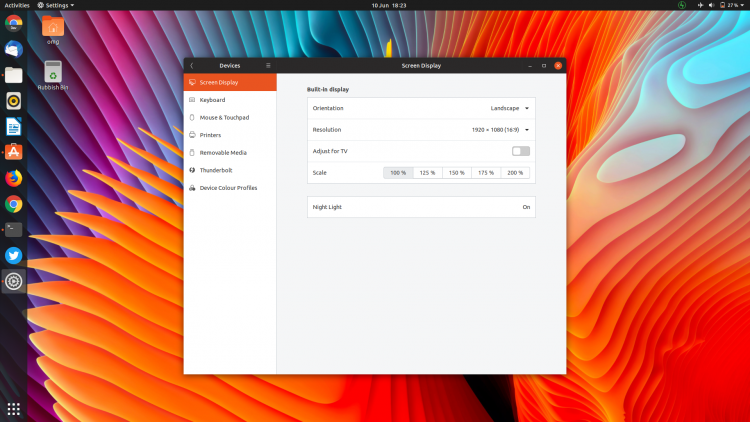
Conversely, at 200%, the only other scale value Ubuntu offers, the desktop is too zoomed in to be usable:
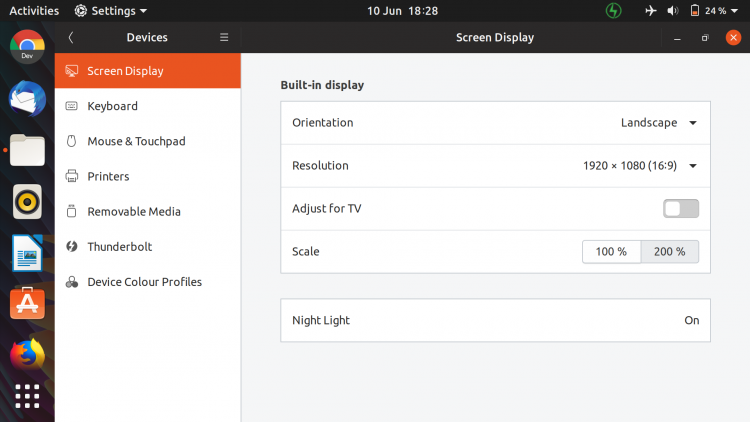
Thankfully Ubuntu 19.04 hides some additional scaling values, values that scale interface elements less dramatically!
And here’s how you can turn ’em on.
Enable Fractional Scaling in Ubuntu 19.04
Now, keep in mind that fractional scaling in Ubuntu 19.04 is hidden for a reason: it’s experimental. That means it may be buggy, have issues, not work as well as you want, and all those associated things.
Put bluntly: you don’t get to complain if things go wrong or it doesn’t work with specific apps.
As mentioned the default display scaling options in Ubuntu 19.04 are 100% or 200% — that’s it. There’s no support (out of the box) for fractional scaling values, like 125% or 150%.
But with a quick command you can unlock 3 fractional scaling values: 125%, 150% and 175%:
To enable fractional scaling in GNOME 3.32 on Wayland run:
To enable fractional scaling in Ubuntu 19.04 on Xorg run:
Once set, you can open Settings > Devices > Screen Display to access additional fractional scaling values, including 125% and 150%.
You can do it via dconf (but it’s a faff)
If you’re not a fan of the command line you can enable fractional scaling manually using a GUI ( dconf ) but, honestly, it’s much faster if you just copy and paste the commands above in a new Terminal window.
Possible Resource Impact

Aside from being buggy and not quite ready for the prime time, there is another reason why you may want to put up with a undersized display.
Some users report that the Xorg process load is higher when these options are turned on and in use. If you experience a slowdown, it may be why. Keep an eye on System Monitor or the top command to see what’s happening on your system.
Disable fractional scaling in Ubuntu 19.04
If you try these additional values out, but find they’re not for you, it’s prudent to “undo” and revert the change.
This is easy enough; pop open a terminal and run:
Et voila: back to two scale options only.
Home » How To » How to Enable Fractional Scaling in Ubuntu 19.04
How To Enable Fractional Scaling in GNOME 3.26 on Ubuntu 17.10
Despite the best efforts of many fractional scaling wasn’t ready for the GNOME 3.26 release earlier this month.
But those of you running GNOME on a HiDPI display need not despair as you can enable experimental fractional scaling in GNOME 3.26 — but only in the Wayland session.
And this post, the one you’re reading, will show you how.
Fractional Scaling in GNOME 3.26
If you follow us on Twitter you may have seen that today, after years of avoiding it, I finally tried Ubuntu (and thus the GNOME Shell desktop) on a HiDPI display.
And… Well, let’s just say it’s clear there’s still some room for improvement!
By tweeting my own initial experiences of Ubuntu on HiDPI monitors, I got some neat tips and suggestions from out followers.
me Among them was in the direction of various settings, hidden and otherwise.
Among them a top tip on how to enable experimental fractional scaling on GNOME 3.26.
Scaling in GNOME
Scaling is — and what follows is not a truly technical or literal definition, so don’t quote it! — the term given to making bits of the UI larger. As in scaling ’em up. By default GNOME 3.26 can only scale in whole numbers — e.g, a scaling factor of 1 (100%), 2 (200%) and so on.
A scaling factor of 2 works great on some types of high resolution displays. It doesn’t suit all.
And that’s where fractional scaling comes in. Like the name suggests this offers you scaling levels at integers between whole number, e.g., 1.25, 1.5, and so on.
I’ll save the pontification about which scaling setting is best for which resolution because a) my math sucks and I’ll get it wrong and b) what pleases my eyes might not please yours.
To enable it just pop open a new Terminal window and run:
Now open Displays from the Applications Overview (or through Settings > Devices > Displays) and you’ll see a number of extra scaling options nestled in the scale section:
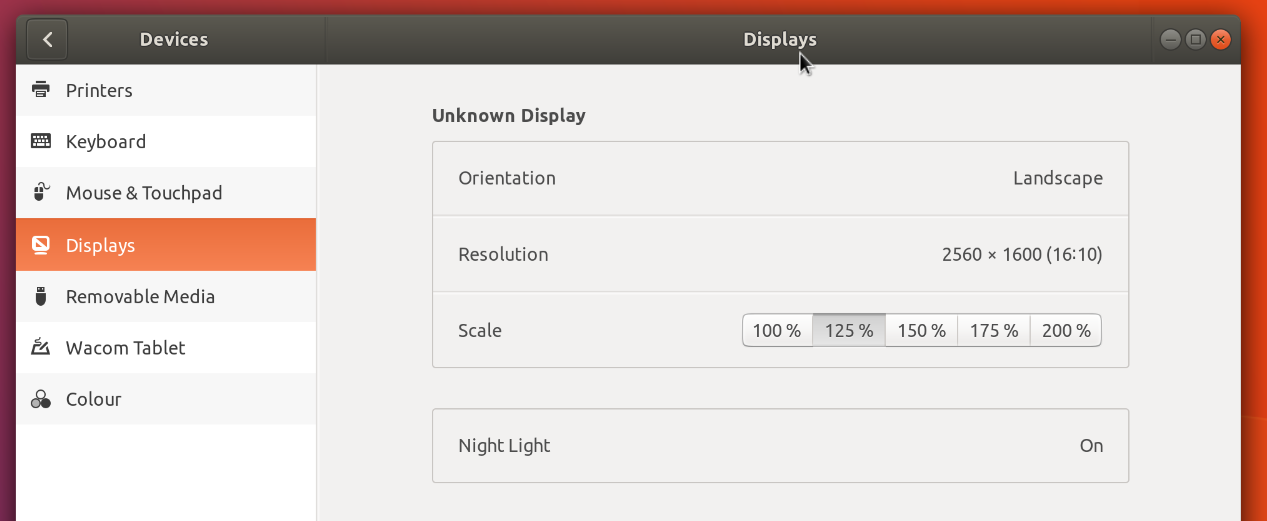
Go ahead and try them out to see which (if any) suits your display.
Remember: this setting is hidden, experimental and only works with Wayland. There are no guarantees that it will keep working. If you’re using the Ubuntu Xorg or GNOME Xorg sessions you can enable the setting above but you won’t see scaling options in Settings — so don’t file a bug!
If you try this out and want to disable fractional scaling support in GNOME 3.26 run:
Home » How To » How To Enable Fractional Scaling in GNOME 3.26 on Ubuntu 17.10
The Status of Fractional Scaling (HiDPI) Between Windows & Linux
Last Updated on July 21, 2019
There’s a special type of displays commonly called “HiDPI“, which means that the number of pixels in the screen is doubled (vertically and horizontally), making everything drawn on the screen look sharper and better. One of the most common examples of HiDPI are Apple’s Retina displays, which do come with their desktops and laptops.
However, one issue with HiDPI is that the default screen resolutions are too small to be displayed on them, so we need what’s called as “scaling”; Which is simply also doubling the drawn pixels from the OS side so that they can match that of the display. Otherwise, displaying a 400×400 program window on a 3840×2160 display will give a very horrible user experience, so the OS will need to scale that window (and everything) by a factor of 2x, to make it 800×800, which would make it better.
Fractional scaling is the process of doing the previous work, but by using fractional scaling numbers (E.g 1.25, 1.4, 1.75.. etc), so that they can be customized better according to the user’s setup and needs.
Now where’s the issue, you may ask? Windows operating system has been supporting such kind of displays natively for a very long time, but Linux distributions do lack a lot of things in this field. There are many drawbacks, issues and other things to consider. This article will take you in a tour about that.
Fractional Scaling on Linux
GNOME
Normal scaling in GNOME has been there for a lot of time, I don’t even remember when it landed; You could easily switch into a 2x or 3x scaling any time you want. But the issue was that it doesn’t support fractional scaling (E.g 125%), so you would end up in a lot of cases in either too large or too small screen resolutions.
In GNOME 3.32, the developers have added an “experimental” support for fractional scaling. Sadly, there’s no option to enable that one in the control center, so you’ll have to apply the following command in the terminal to enable it:
After that, if you head to the GNOME Control Center, you’ll be able to see both the 125% and 175% options now:
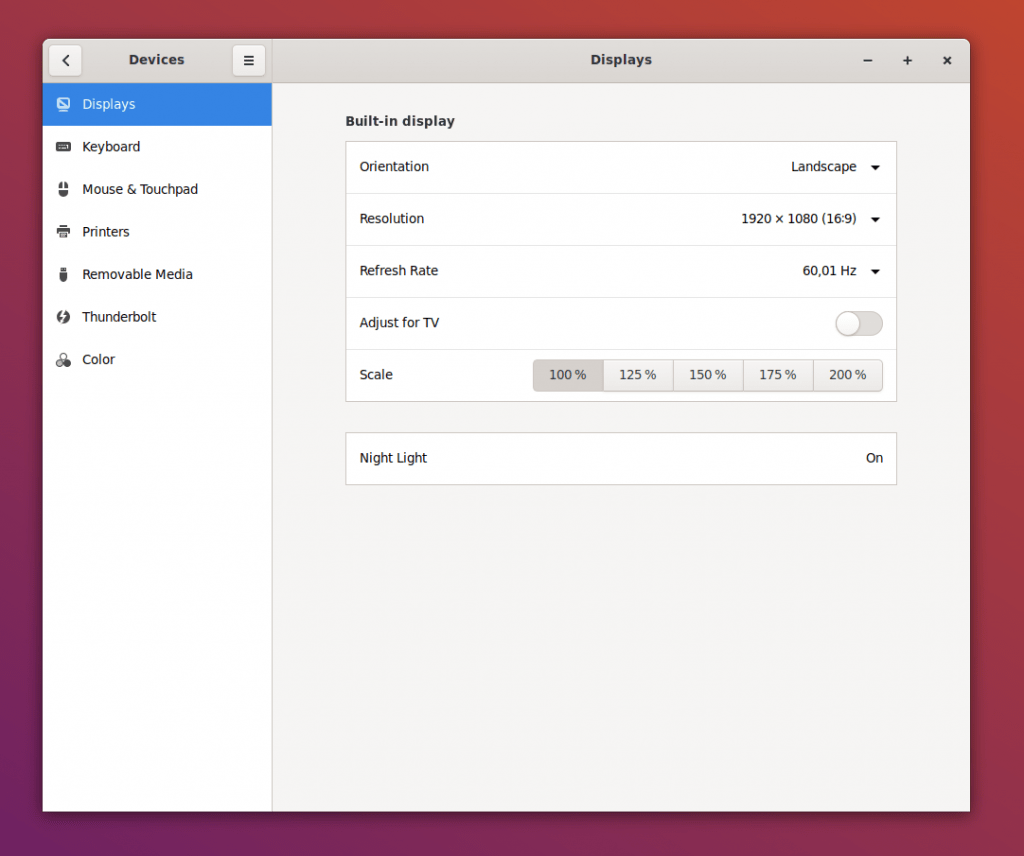
Everything looks nice so far. However, from my experiments, this experimental scaling is very buggy on GNOME.
The following video demonstrates how I no longer can launch Flameshot to take screenshots of my desktop. GNOME Screenshots tool does work, but I depend on Flameshot a lot in my workflow, and I can’t offer to miss that:
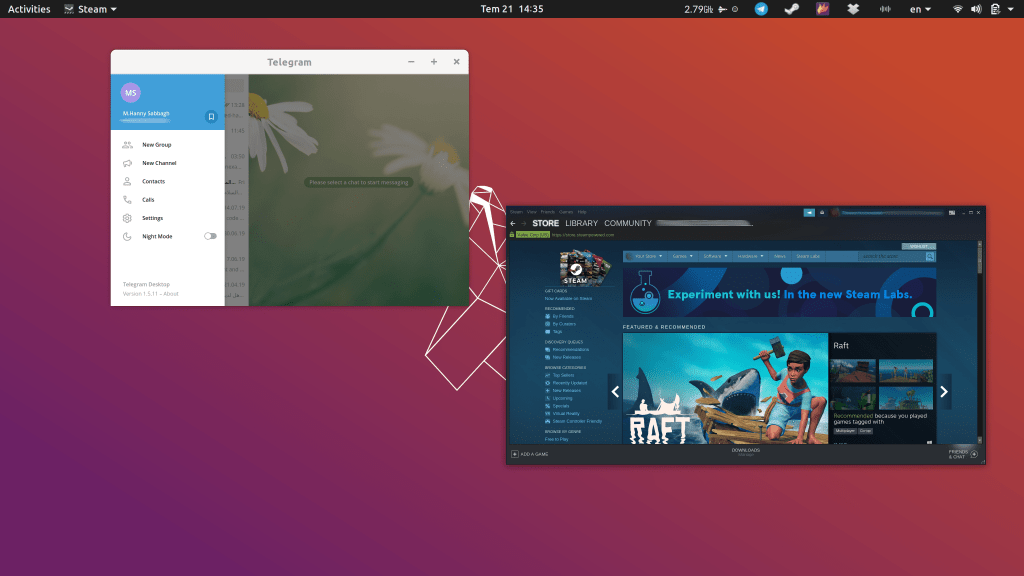
Some applications like Telegram and Steam do not scale good (Telegram does have an option in its settings to scale it up, but it doesn’t get scaled by the DE instantly), I don’t know if some workarounds exist for Steam or not:
Also, here’s a video demonstrating how changing the levels of brightness or volume while playing games can give an unacceptable experience (Notice how the screen lags and goes back and forth):
Aside from the issues mentioned, fractional scaling on GNOME works good. All the native GTK apps on my desktop scaled with no problem (Nautilus, Terminal, Gedit.. Everything).
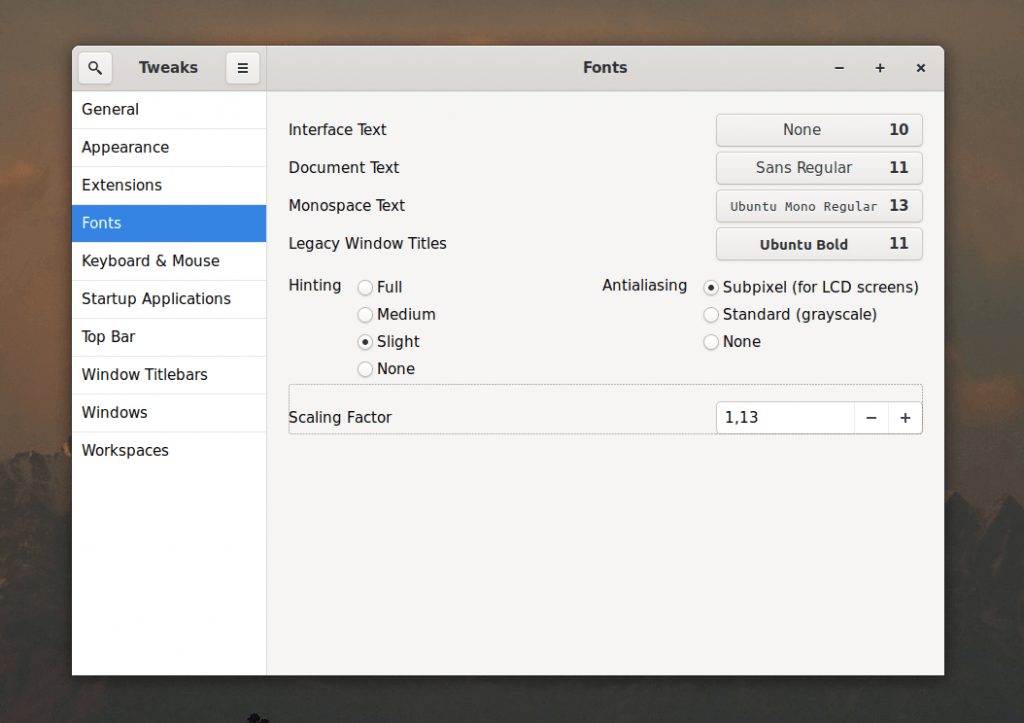
In addition to fractional scaling, GNOME supports fonts scaling, which allows you to control the fonts size scale only, and you can set it for whatever value you like. From my experience, I had no issues with it:
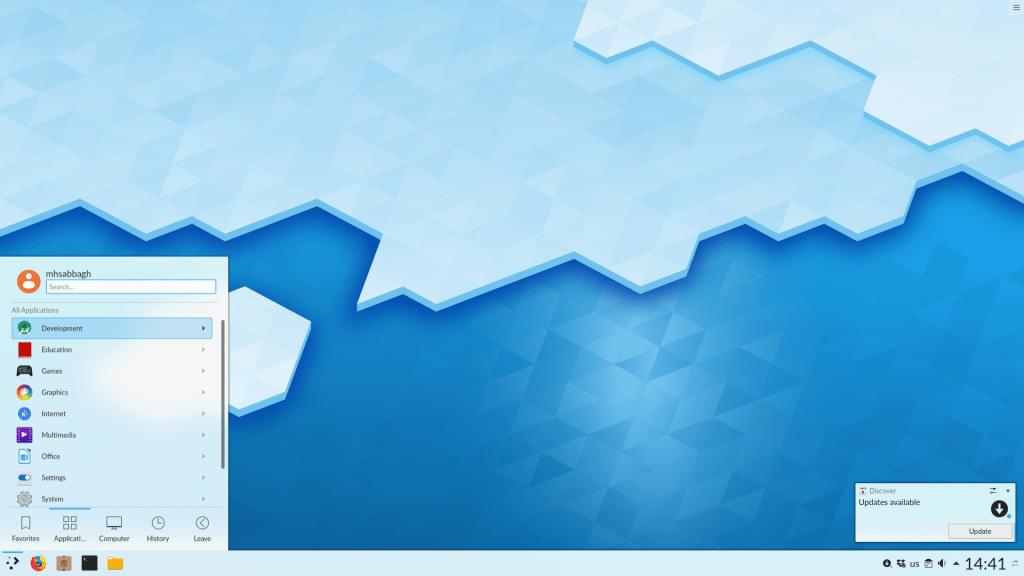
I think that KDE has the best support for fractional scaling on Linux. While nothing is applied automatically out-of-the-box, fractional scaling support in KDE is stabilized. So you can simply open the KDE Settings and scale your display however you like:
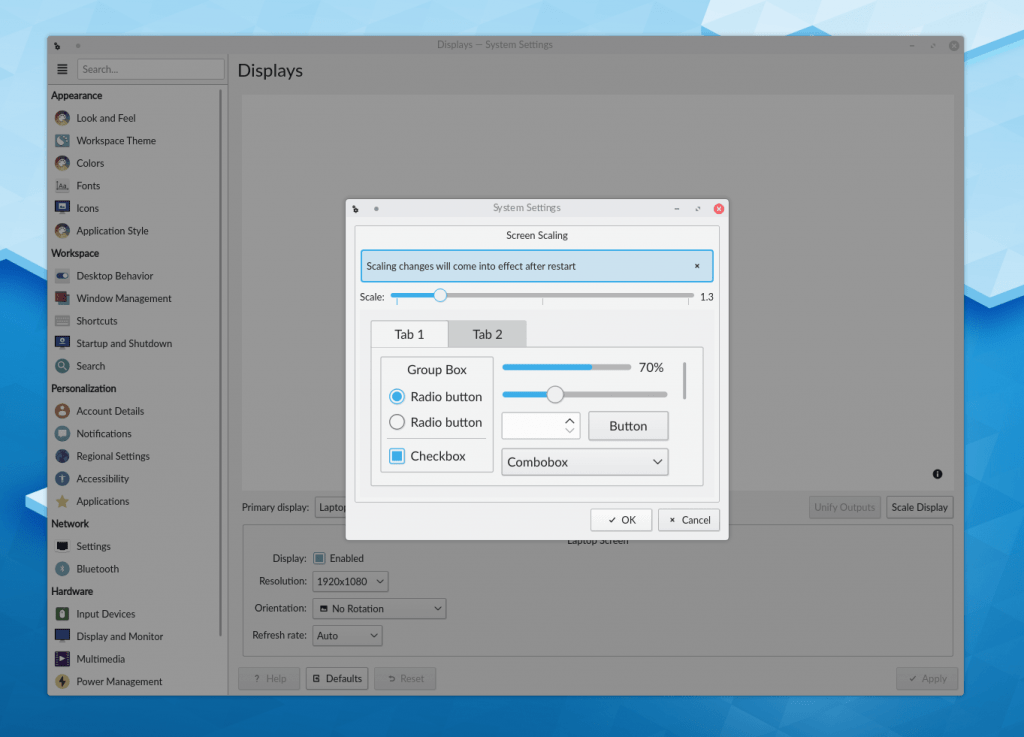
Notice how you can choose some values like 1.1, 1.2, 1.3… Those values do not exist in GNOME’s control center, and in fact, as you will see later, not even in Windows 10. There’s just some fixed values like 125% and 175% there.
However, one drawback here is that Firefox on KDE doesn’t scale. Notice how small its components are compared with the other elements. I am not sure if this issue is only related to Firefox, or all other GTK applications for example:
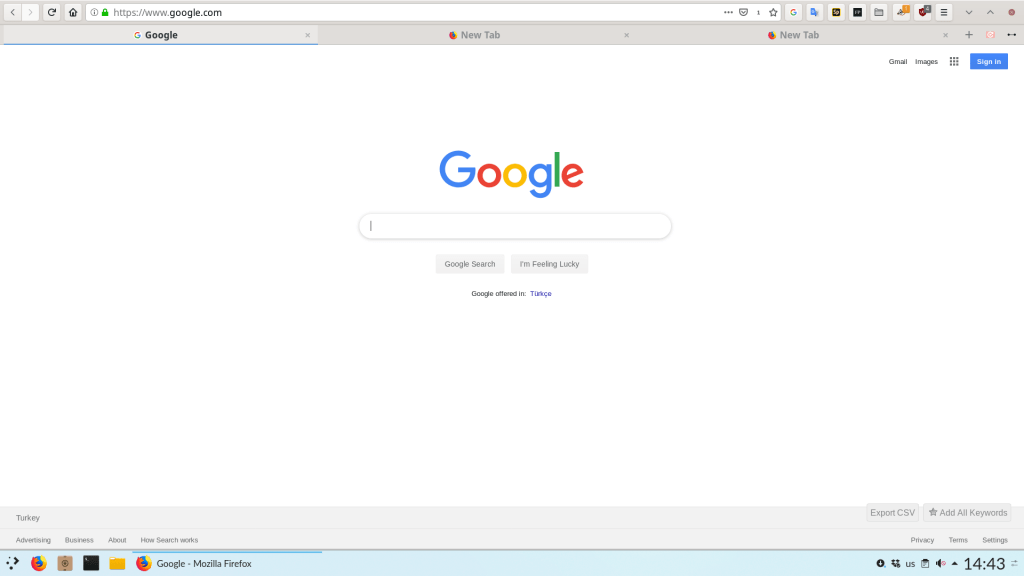
Steam and Telegram were scaled with no problem. It was just Firefox who was having an issue. As a small workaround, I found a Firefox extension called “Zoom Page WE” that increases the zoom level on all website to whatever level you choose. So in this case, I used it to automatically increase everything to 120%.
I didn’t face any issues in Steam while playing a game and change the levels of brightness/volume, it’s just working.
Other Desktops
The GNOME’s Wayland compositor does support the same scaling in Xorg. The KDE Wayland Compositor developers have been working on a solution for a while, and you can check their progress from GitLab.
It also sounds like Sway (Which is an i3-like compositor) does support HiDPI scaling so far. But I haven’t tested it personally.
Xfce doesn’t support HiDPI scaling, same is true for MATE (Which is normal since they written in the same GTK toolkit).
Fractional Scaling (HiDPI) Support on Windows 10
I have to admit that HiDPI support on Windows is the best one available in the market. In Windows, if the system detects that your display is actually too large in terms of pixels, then scaling will be automatically applied for you.
Just directly after installing a fresh copy of Windows 10, I noticed that the system is already set to a scale of 125%:
Automatic Fractional Scaling on Windows 10
» data-medium-file=»https://fosspost.org/wp-content/uploads/2019/07/Windows-1-300×169.png» data-large-file=»https://fosspost.org/wp-content/uploads/2019/07/Windows-1-1024×576.png» loading=»lazy» src=»https://fosspost.org/wp-content/uploads/2019/07/Windows-1-1024×576.png» alt=»fractional scaling 19″ width=»850″ height=»478″ srcset=»https://fosspost.org/wp-content/uploads/2019/07/Windows-1-1024×576.png 1024w, https://fosspost.org/wp-content/uploads/2019/07/Windows-1-150×84.png 150w, https://fosspost.org/wp-content/uploads/2019/07/Windows-1-300×169.png 300w, https://fosspost.org/wp-content/uploads/2019/07/Windows-1-768×432.png 768w, https://fosspost.org/wp-content/uploads/2019/07/Windows-1-850×478.png 850w, https://fosspost.org/wp-content/uploads/2019/07/Windows-1.png 1920w» sizes=»(min-width: 960px) 75vw, 100vw» title=»fractional scaling 20″> Automatic Fractional Scaling on Windows 10
In comparison, notice how a normal 100% scale would look like:
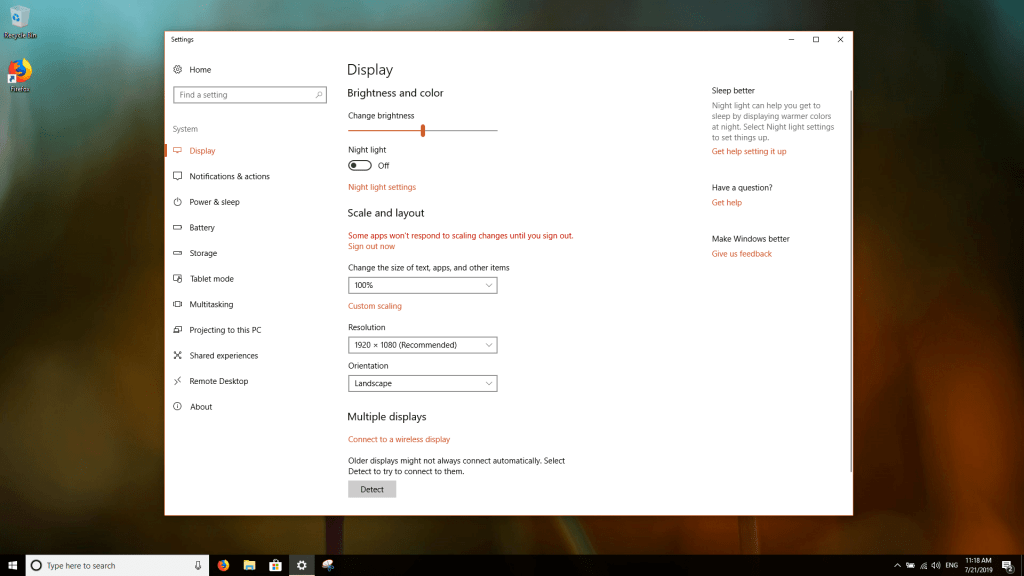
There are some other options to choose from too, but it sounds like Windows can’t be tweaked into using some other manual values (E.g 135%), but I think those ones are quite more than enough for my display:
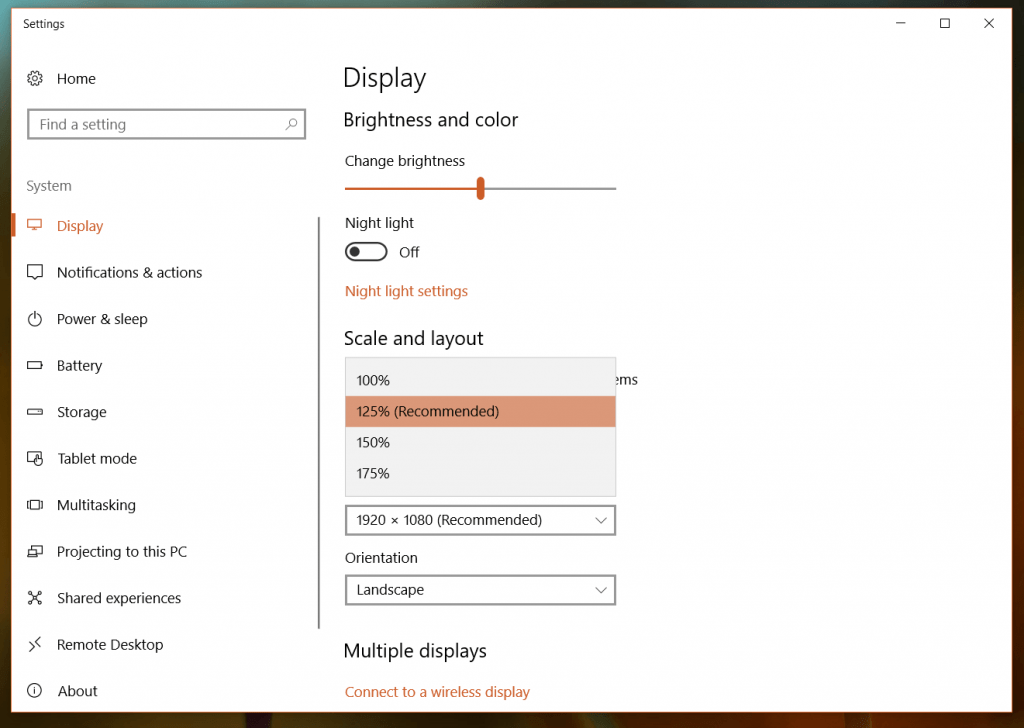
What’s actually nice on Windows is that everything scales with no issues too: Steam, Telegram, Firefox… Every single app you have will look just as expected. There’s no need to Google about “how to enable experimental scaling in Windows”, there’s no need to ask for help in solving the bugs afterwards… It just works automatically out of the box.
And Windows support for HiDPI isn’t something new like most Linux DEs. It has been available almost from the same time when those screens became available in the market. So the factor of availability of support is also important for the user. In GNOME, for example, the feature is still experimental.
Conclusion
You’ve seen how all of these working environments support HiDPI. It is fair to admit that having a multi-billion dollar company like Microsoft behind Windows is totally different than the small organizations or communities behind the famous Linux desktops, so of course the results are going to differ. Think of this article as as an explanation of the situation rather than pointing fingers to someone.
However, the progress is great so far, and we are almost there!
Включить дробное масштабирование для Ubuntu 18.04
Недавно я установил Ubuntu 18.04 и обнаружил, что опция дробного масштабирования, которая была в 16.04, больше не существует. 200% слишком велико для моего дисплея, и этот ответ не сработал для меня (параметры не изменились после выполнения команды).
Есть ли другой способ получить дробное масштабирование?
Эта команда не отображает масштабирование. Небольшой трюк с масштабированием текста для решения проблемы HiDP в Ubuntu. Все еще в поисках идеального решения.
XOrg решение
Archwiki предлагает решение (или, скорее, взлом) с помощью xrandr (если вы используете стандартную Ubuntu 18.04 с xorg):
Фракционное масштабирование
Настройка 2, 3 и т. Д., И это все, что вы можете сделать с коэффициентом масштабирования, может быть не идеальным для некоторых дисплеев HiDPI и небольших экранов (например, для небольших планшетов).
Xorg
Вы можете добиться любого нецелого масштабного коэффициента, используя комбинацию масштабного коэффициента GNOME и xrandr. Эта комбинация обеспечивает правильное масштабирование шрифтов TTF, чтобы они не были размытыми при использовании только xrandr. Вы определяете коэффициент увеличения с помощью gsettings и коэффициент уменьшения с помощью xrandr.
Сначала масштабируйте GNOME до минимального размера, который слишком велик. Обычно «2» уже слишком велико, в противном случае попробуйте «3» и т. Д. Затем начните масштабирование, установив коэффициент уменьшения с помощью xrandr. Сначала получите соответствующее имя выхода, в приведенных ниже примерах используется eDP1. Начните, например, с уменьшения в 1,25 раза. Если пользовательский интерфейс все еще слишком большой, увеличьте масштабный коэффициент; если оно слишком мало, уменьшите масштабный коэффициент.
Wayland решение
Начиная с Ubuntu 18.04, Wayland является протоколом отображения по умолчанию.
Чтобы включить масштабирование:
Включить экспериментальную функцию дробного масштабирования:
How to Enable Fractional Scaling in Ubuntu 20.04

If your laptop comes with a HiDPI display and you are running Linux on it, you will find that all your icons, windows and text are too small to see properly. This is where fractional scaling comes in. Here we will show you how to enable fractional scaling in Ubuntu 20.04 (Gnome).
What Is Fractional Scaling?
Fractional scaling is a way of upscaling your icons, application windows and text so they don’t appear squashed in a high-resolution display.
Gnome has always supported HiDPI, though it is limiting, as its upscale factor is only 2: either you double the size of your icons or none. In most cases, a scale factor of 2 makes the icon size too big, which doesn’t provide an optimal user experience.
This is why fractional scaling is important, as it allows you to scale to a fraction rather than a whole integer. A scale factor of 1.25 or 1.5 will give the best user experience.
Enable Fractional Scaling in Ubuntu 20.04
Ubuntu 20.04 comes with Gnome 3.36 which provides native support for fractional scaling. It is not enabled by default, though it can be easily found in the Settings. Do note that this is still an experimental feature, and many people have reported issues, particularly screen tearing, with fractional scaling. If you are using a Nvidia graphics card, the fractional scaling may not work well either.
Also, enabling fractional scaling may increase power usage, lower speed and/or reduce display sharpness. Use it at your own risk.
1. On Ubuntu 20.04 Desktop, click the Apps Overview icons (at the bottom left of the sidebar launcher).
2. Scroll down to find Settings and click to open it.
3. Once you are in the Settings, go to “Displays” on the left pane.

4. You will see that the Fractional Scaling option is disabled. Move the slider to enable it.
5. A Scale option will appear allowing you to select a scaling factor of 100%, 125%, 150%, 175% or 200%. You can start off with 125%.

6. Click the green “Apply” button at the top right of the window. The desktop size will instantly change and a pop-up will appear asking if you want to “Keep Changes” or “Revert changes.”
7. Click “Keep Changes.”
On a side note, I have been using fractional scaling for a few months on Linux Mint Cinnamon desktop and have never had an issue with it. If you are having an issue with fractional scaling on Ubuntu and can’t live without it, you may want to consider switching to Linux Mint or maybe just install the Cinnamon desktop.
Never Miss Out
Receive updates of our latest tutorials.
Damien Oh started writing tech articles since 2007 and has over 10 years of experience in the tech industry. He is proficient in Windows, Linux, Mac, Android and iOS, and worked as a part time WordPress Developer. He is currently the owner and Editor-in-Chief of Make Tech Easier.
One comment
My system only gives me the choice of 100% and 200% and nothing in between. Otherwise I have all what you say. I am running POP!_OS 20.04LTS on a System76 laptop that has a HiDPI dis[lay.
It would be nice to be able to do fractional scaling.
Comments are closed.
Popular Posts

INNOCN PF15-PRO Portable Touchscreen Monitor Review

How to Mount Your iPhone as an External Drive in Ubuntu

15 of the Best Linux Games in 2021

How to Reset the Root Password in Linux

8 Useful and Interesting Bash Prompts
4 Ways to Hide Desktop Icons in Ubuntu

The Ultimate Guide to Apt and Apt-Get Commands


How to Convert Ubuntu Into Regolith Linux

How to Create an SSH Honeypot to Catch Hackers in Your Linux Server

Why Do Games On Linux Stutter? Here Are the Possible Reasons
Affiliate Disclosure: Make Tech Easier may earn commission on products purchased through our links, which supports the work we do for our readers.